I still remember the weekend when Human Torch and The Thing landed in Marvel Rivals. I was grinding ranked matches, watching players experiment with Storm and Human Torch, and the fire tornado ult combo was everywhere. It was exciting, chaotic, and exactly the kind of comic-book fantasy that made the game special. Then the news hit that the US-based Marvel Rivals development team had been laid off out of nowhere. The contrast was hard to process: one of the most successful hero shooters in years was cutting people while millions of players were enjoying their work.
Now, in 2026, those events still echo through the community. Thaddeus Sasser, the former director of the Seattle arm of the Rivals development team, used LinkedIn to claim that he and his team were responsible for one of the game's defining features: team-up abilities. The layoffs had already raised eyebrows because Marvel Rivals was enjoying massive success. But hearing a department lead say that the people who built the mechanic were let go made the situation feel even stranger.
Sasser explained that when he and his team joined development, one of the first things they designed was the team-up system. His love for the comics drove that pitch. In the source material, heroes rarely operate alone. The Avengers, the X-Men, the Fantastic Four, these are not isolated power fantasies; they are teams with overlapping strengths and rivalries. That made team-up abilities feel like a natural translation from page to screen. Instead of treating every hero as a solo character, Rivals could reward synergy and comic history.
That idea also gave Marvel Rivals a fresh identity in a crowded multiplayer market. The team wanted to avoid forcing players into rigid roles while still making the game feel distinct from other hero shooters. The continued absence of a role queue is still a point of pride for the game today, even as some players complain about matches with no healers. Did team-ups solve that problem perfectly? No, but they added a layer of tactical creativity that softened the pain of imperfect compositions.
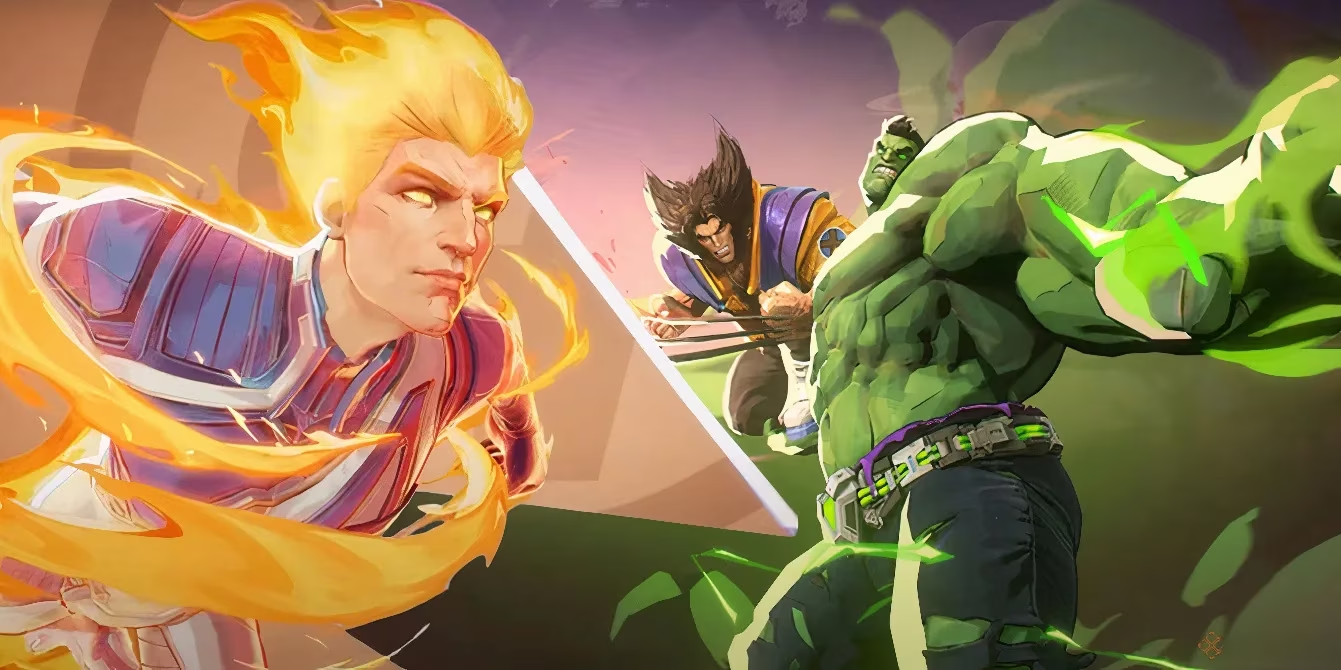
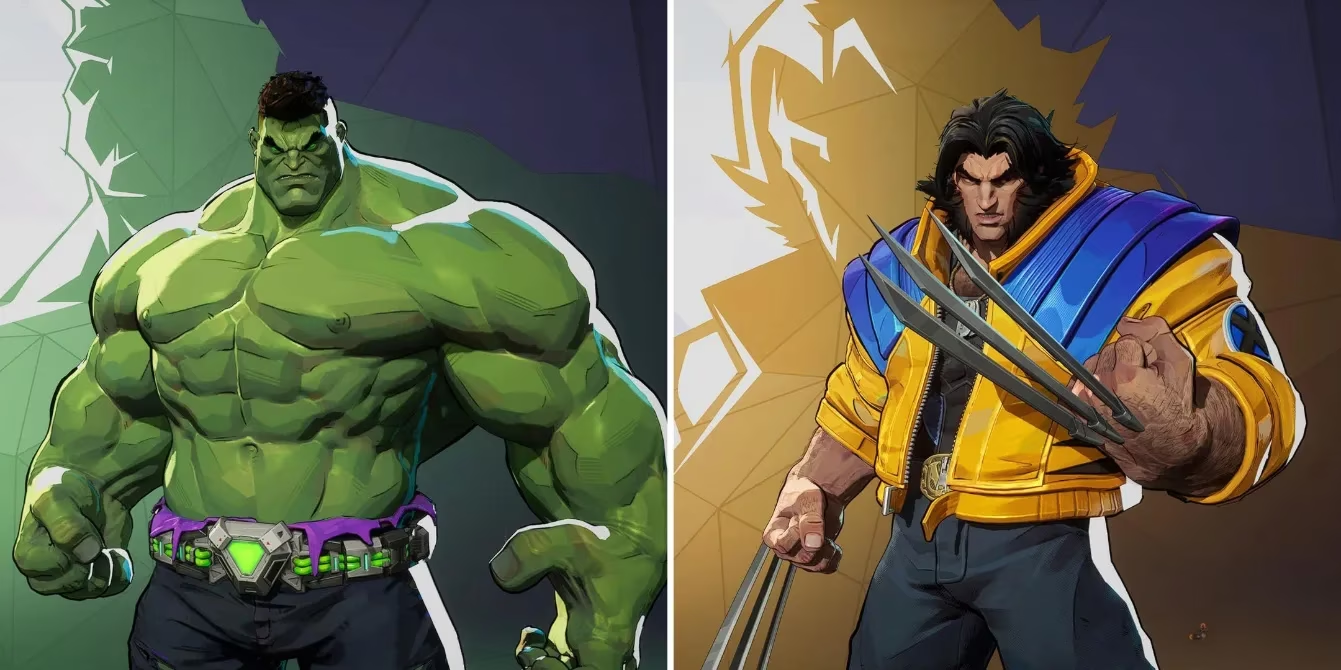
The most famous example is the Fastball Special. Hulk picks up Wolverine and hurls him across the map, claws first, into whatever poor soul happens to be in the way. That single interaction captures the joy of comic-book crossover better than most story modes could.
Then there is the Storm and Human Torch combination. On the weekend of the update, players quickly discovered that combining their ultimates created a devastating fire tornado. Sasser says that concept was in his original pitch for team-up abilities. So the moment players were being swept up by fire tornadoes, the person whose team envisioned that exact fantasy was no longer part of the studio. How does that make sense?
I have asked myself that question many times since. It is not just about one director or one team. It is about what live-service games value. A game can post huge player counts, generate massive revenue, and become a cultural talking point, yet still be described as needing efficiency. NetEase released a statement after the layoffs saying the cuts were made to optimize efficiency and that neither the quality nor the frequency of Rivals updates would be affected.
As a player, I rarely find that kind of corporate language reassuring. Can you really remove key creative voices and expect the same spark? I understand that companies have internal reasons they cannot always share. But when a director who helped build the game's identity says goodbye, it is fair to wonder what was lost in the name of efficiency.
By 2026, Marvel Rivals is still part of the hero shooter conversation. Team-up abilities remain a defining feature. The Fastball Special still appears in highlight reels. Fire tornadoes still decide team fights. Those mechanics are not just technical systems; they are the fingerprints of real people, including people who were let go at an odd moment. Every time I see a coordinated Wolverine and Hulk play, I think about that. Every time Storm and Human Torch curl a flame into a cyclone, I think about that.
The industry loves to celebrate games as magical products, but it is built by human beings. The Marvel Rivals layoffs were a reminder that success does not protect anyone. The question now, looking back from 2026, is whether the people who remain can carry the same creative energy forward, and whether the players will notice if they cannot.
I believe they will.