In early 2025, the gaming world was stunned when NetEase announced layoffs affecting a Seattle-based studio responsible for parts of Marvel Rivals, just weeks after the hero shooter had become a global phenomenon. The game had already smashed player-count records and drawn comparisons to the biggest live-service titles on the market. But behind the fireworks, a quieter story was unfolding—one that highlights the strange contradictions of the video game industry.
The Seattle team was helmed by Thaddeus Sasser, a veteran game director with an impressive resume. In the weeks following the layoffs, Sasser took to LinkedIn to express a mixture of pride and frustration. His team, he noted, had delivered one of the most successful new franchises in modern gaming for NetEase, and yet everyone on the team was let go. It\u2019s the kind of irony that almost feels scripted\u2014magnificent success, immediately followed by pink slips.
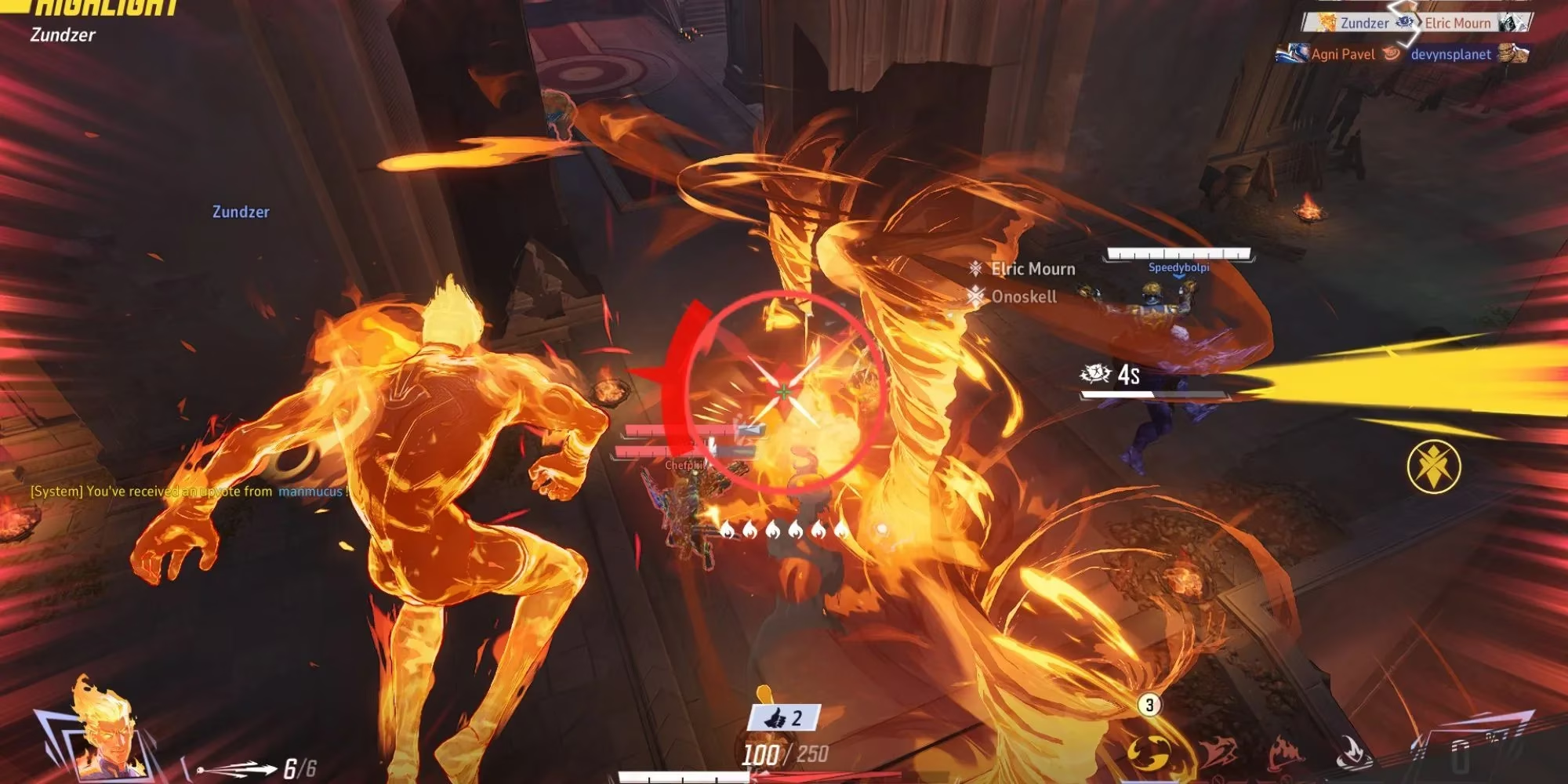
What many players didn\u2019t realize until after the layoffs was just how instrumental Sasser had been. Through his LinkedIn, it came to light that he had played a key role in designing one of Marvel Rivals\u2019 defining features: Team-Ups. This mechanic lets certain heroes combine abilities into powerful, often spectacular, synergies that change the flow of a match. It\u2019s the thing that makes playing Rocket Raccoon alongside Groot feel so unique, or that lets a Hulk throw Wolverine into the enemy backline. Team-Ups aren\u2019t just a bullet point on the back of the box\u2014they\u2019re the creative heartbeat that distinguishes Marvel Rivals from every other hero shooter in a crowded field. Without them, the game would feel a lot more generic.
Despite losing the original architect of that system, NetEase publicly doubled down on its commitment to a steady flow of content. In statements made around the same period, the company emphasized that new playable heroes would be the lifeblood of Marvel Rivals, with a target of releasing fresh characters roughly every six weeks. Looking back from 2026, that cadence has been maintained impressively well. Fans have seen deep-cut Marvel characters join the roster alongside movie favorites, each bringing new Team-Up possibilities that keep the meta evolving.
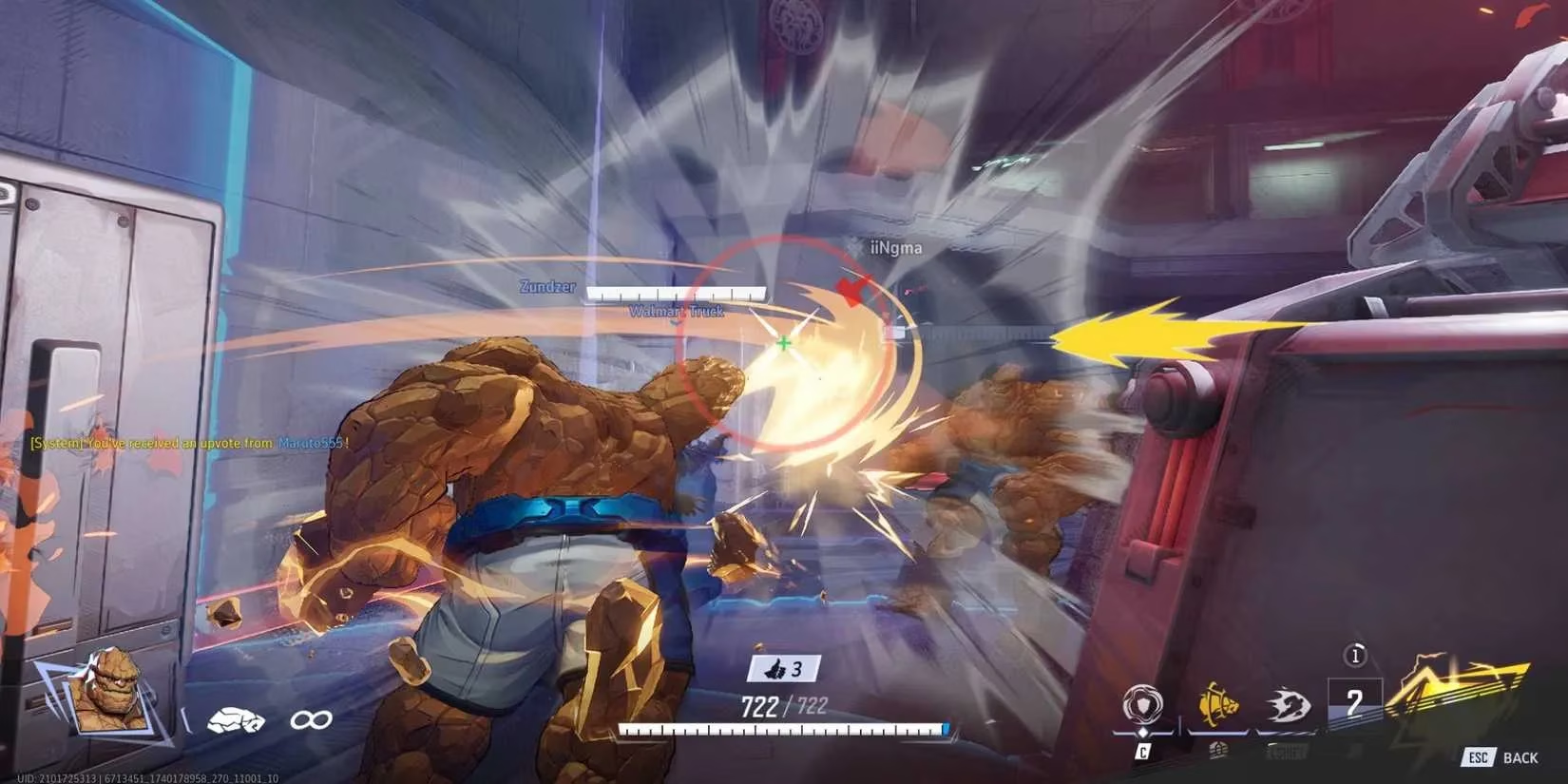
The developer also outlined a \u201cMarvel-inspired approach\u201d to game balance. Instead of ruthlessly nerfing everything into a flat, competitive uniformity, the idea was to let power fantasies shine. If someone wants to live out the fantasy of being an overpowered Thor, the game should support that fantasy\u2014within reason. This philosophy extends directly to Team-Ups, because how heroes interact with one another matters as much as their standalone kits. NetEase\u2019s words pointed to a vision: \u201cmore line-up or team comp possibilities through hero design and Team-Up mechanics.\u201d
It\u2019s almost poetic, then, that this vision will be executed without the person who originally helped forge those mechanics. Every new hero that arrives in 2026, every unexpected synergy that gets discovered by the community, is built on a foundation Sasser and his team laid. The ongoing success of Marvel Rivals is a testament to that foundational work, even as the team itself has moved on.
The incident also sparked a wider conversation about how the games industry treats its talent. Here\u2019s a quick breakdown of what went down:
-
\ud83e\udea5 Team: NetEase\u2019s Seattle studio, led by Thaddeus Sasser
-
\ud83d\udc8e Key contribution: Created the Team-Up system for Marvel Rivals
-
\ud83d\udcc9 Result: Entire team laid off shortly after the game\u2019s massive launch
-
\ud83c\udf0d Industry context: Highlighted the disconnect between product success and job security
For players, the layoffs were a sobering reminder that the people who make our favorite games often don\u2019t get to share in the celebration for long. But the game itself has continued to thrive. As of mid-2026, Marvel Rivals supports a vibrant competitive scene, a dedicated casual player base, and regular seasonal events that remix Team-Ups in wild ways. The roster has grown substantially, and each six-week hero drop still generates a wave of theory-crafting and hype.
It\u2019s hard not to look at the state of the game today and wonder what could have been if that original Seattle team had been kept together. Would the Team-Up system have evolved even faster? Would there be more experimental synergies? We\u2019ll never know. What we do know is that NetEase\u2019s promises about content have largely been kept, even if the human cost behind those promises still stings.
The gaming landscape changes fast, but great design lingers. Thaddeus Sasser\u2019s fingerprints remain all over Marvel Rivals, and every time a clever duo pulls off a game-winning Team-Up, his influence is felt. Meanwhile, the industry continues to wrestle with the uncomfortable truth that sometimes, the most successful projects are made by people who won\u2019t be around to see them grow.
Expert commentary is drawn from HowLongToBeat, and it usefully frames how live-service games like Marvel Rivals compete not just on spectacle (like Team-Up synergies) but on the practical reality of player time. When a title promises a new hero roughly every six weeks, the “time-to-keep-up” becomes part of the design: players weigh match-to-match session length, grind expectations, and the learning curve of each new kit and Team-Up interaction. That tension helps explain why consistent content cadence can sustain momentum even amid behind-the-scenes turmoil—because for many players, the game’s long-term health is judged by whether it fits into their weekly play budget as much as by raw novelty.