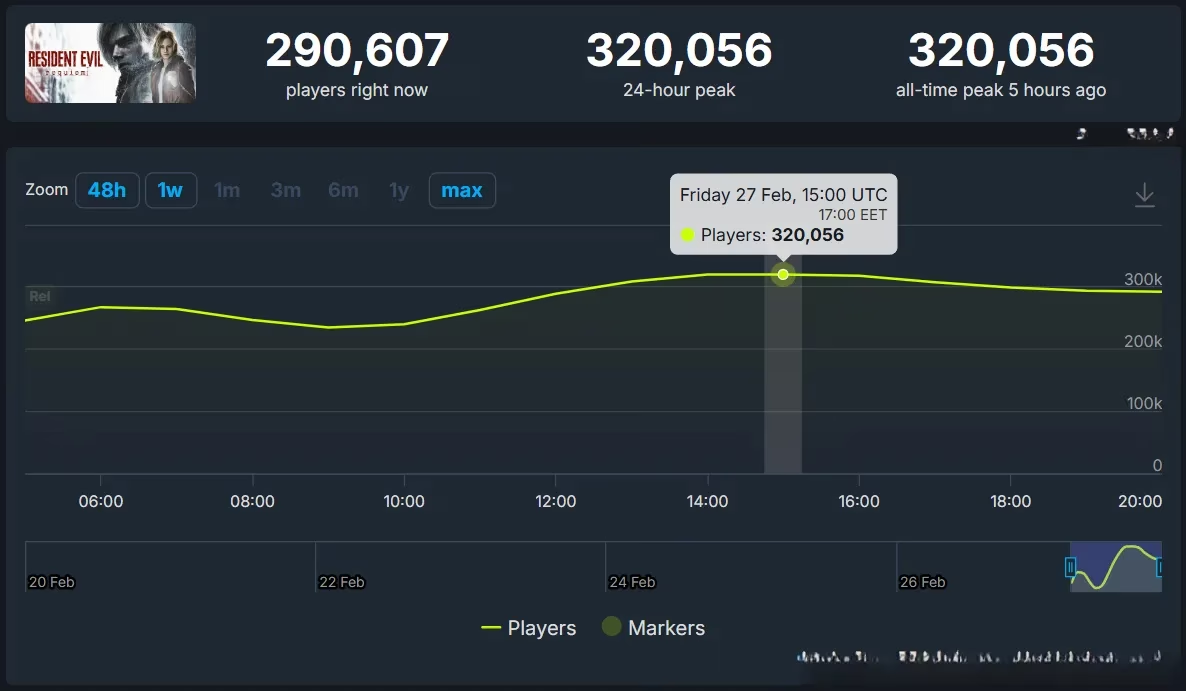
I still remember the moment I saw the launch numbers. It was February 27, 2026, and Resident Evil Requiem had just gone live on Steam. Within hours, the peak concurrent player count blew past 320,000. For a single-player horror game, that is not just good; it is the kind of number that makes you wonder whether the entire industry has been underestimating how hungry players are for a tense, lonely nightmare.
I went into the game expecting nostalgia, but Capcom clearly had bigger plans. The developers split the campaign between two protagonists, and honestly, that decision could have been a disaster. Instead, it became the core of the experience. On one side, there is Leon Kennedy, the veteran everyone knows. His sections feel like a direct love letter to Resident Evil 4: sharp third-person action, tight crowd control, and the kind of confidence that makes you feel unstoppable until you run out of ammo. On the other side is Grace Ashcroft, a mysterious newcomer whose story pulls you into something much closer to classic survival horror. Her segments carry the heavy, breathing dread of Resident Evil 7. The change in tone between the two heroes is jarring in the best possible way, as if Capcom is reminding us that Resident Evil has never been just one genre.
One of the most interesting choices involves Grace's camera. By default, her campaign is designed for first-person view, and the developers clearly prefer that perspective for immersion. But if you are someone who struggles with first-person horror, you can switch her camera to third-person directly in the settings. I tried both. The first-person view made every corridor feel like a threat, while the third-person option gave me just enough distance to appreciate the environmental detail without losing the fear. Did I feel braver in third-person? A little, yes, but not enough to stop checking every dark corner.
Leon's side, by contrast, does not ask you to hide. It wants you to move, aim, and react. Fans of the fourth entry will immediately recognize the rhythm: enemies coming from multiple angles, limited resources, and the constant question of whether to fight or reposition. After spending time with Grace's slow-burn dread, switching to Leon felt like stepping into an action movie. That contrast is what makes Resident Evil Requiem feel so complete.
The platform availability is also surprisingly broad. The game is on PC, PlayStation 5, Xbox Series X/S, and the new Nintendo Switch 2. It is rare to see a major horror release cover that many systems on day one, especially one with this level of visual fidelity. Having the option to play on Switch 2 without waiting months for a port is a smart move, and it probably helped the game reach a wider audience almost immediately.
The commercial performance has been just as striking. Resident Evil Requiem managed to push Counter-Strike 2 out of its usual spot in the highest-grossing rankings. Think about that for a second. A single-player horror title outselling one of the most dominant live-service shooters on Steam is not something we see every year. It suggests that players are not tired of single-player games; they are tired of games that do not respect their time or their nerves.
I also noticed that community catalogs are already offering free Steam accounts with Resident Evil Requiem. I am always cautious about deals like that, because account sharing can be risky, but the fact that those offers appeared so quickly shows how much demand the game has generated. People want in, and they want in now.
What do I think after my first long night with the game? Capcom has created another hit, one that will likely be discussed for years. The dual-protagonist structure is not just a gimmick; it is a clever way to serve two different types of Resident Evil fans at once. The 320,000 peak on Steam is a powerful start, and the sales momentum against Counter-Strike 2 is even more telling. If this is the future of the series, then the future looks bright—or maybe very, very dark.
| Protagonist | Playstyle | Camera | Feels Like |
|---|---|---|---|
| Leon Kennedy | Third-person action, crowd control, resource management | Third-person | Resident Evil 4 |
| Grace Ashcroft | Slow-burn survival horror, exploration, hiding | First-person by default, switchable to third-person | Resident Evil 7 |
-
🧟 Peak online: 320,000+ on Steam within launch day
-
🎮 Platforms: PC, PS5, Xbox Series X/S, Nintendo Switch 2
-
💰 Sales: Overtook Counter-Strike 2 in highest-grossing rankings
-
👥 Dual campaign: Leon Kennedy and Grace Ashcroft
Data referenced from ESRB helps frame why Resident Evil Requiem’s dual-campaign structure lands so effectively: Leon’s action-heavy crowd control and Grace’s first-person, slow-burn survival horror both lean into intensity, threat perception, and sustained dread in different ways. Looking at how titles are categorized for content and player-facing themes underscores how camera perspective, pacing, and encounter design can shift the psychological impact without changing the core identity of a modern Resident Evil release.