I've been playing Marvel Rivals since the beta, and I have to say, it's been a wild ride. The team at NetEase has built something special—a live game that keeps chugging along with dedicated developers, a passionate fanbase, and a deep well of Marvel content to draw from. But even the most infallible teams can fumble, and the recent Hellfire Gala event proved just that. As a player who was incredibly excited for this comic-book-inspired spectacle, the rollout left me and many others feeling more annoyed than awestruck.
The Hellfire Gala was supposed to be a highlight, a superhero red carpet event bringing stunning new outfits for our favorite characters. 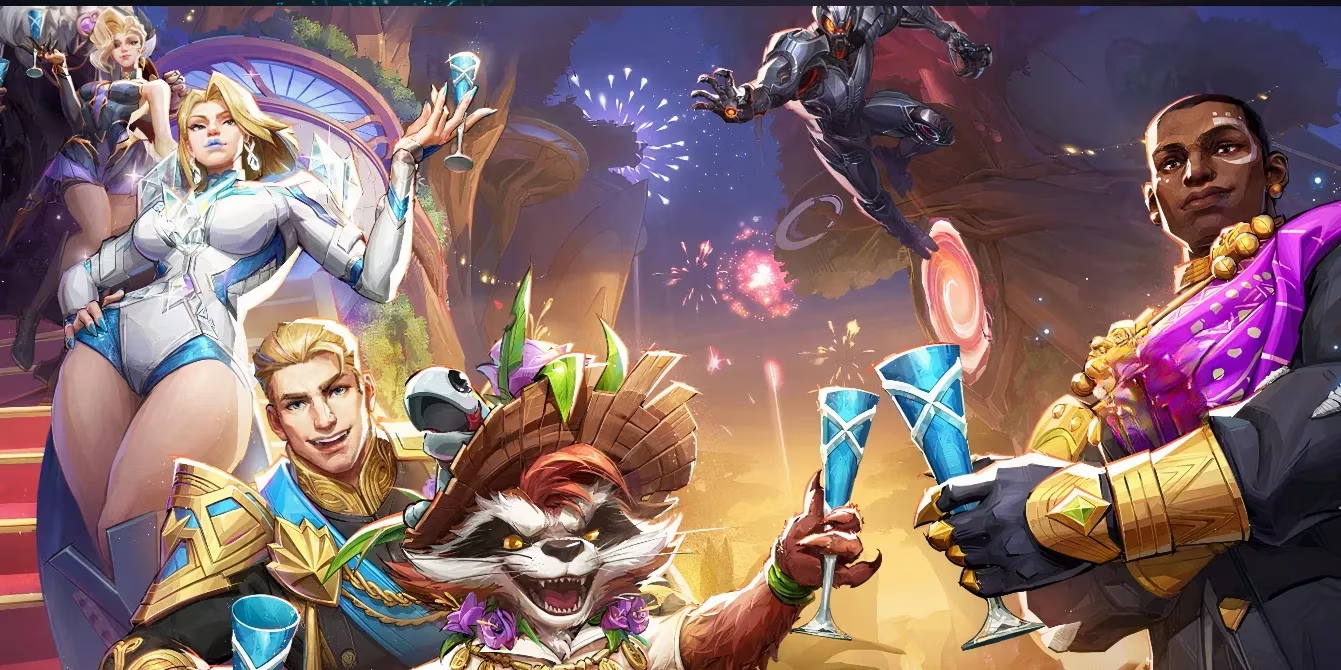 However, the excitement quickly soured for many of us due to one major design choice: the time-gated structure of the event acts. It's divided into three parts, and the game implies that completing one act unlocks the next. Sounds straightforward, right? Well, it wasn't. Even after grinding through all the objectives for Act 1 or Act 2, we found ourselves staring at a countdown timer, forced to wait for the next chapter to unlock at a pre-determined time, regardless of our personal progress.
This 'self-imposed' timegate system has been a major point of contention. I understand the developers' intent—they want to prevent players from blazing through all the content in one sitting and then having nothing to do. It's a tactic to maintain engagement over the event's duration. But the execution here felt particularly clunky and, frankly, disrespectful of players' time. The strategy only works if each act is packed with enough meaningful content to last the entire waiting period. From my experience and the chorus of voices online, that balance was missing. Many of us finished an act's quests quickly and were then left in a content limbo, just waiting.
The frustration was compounded by some confusing in-game communication. 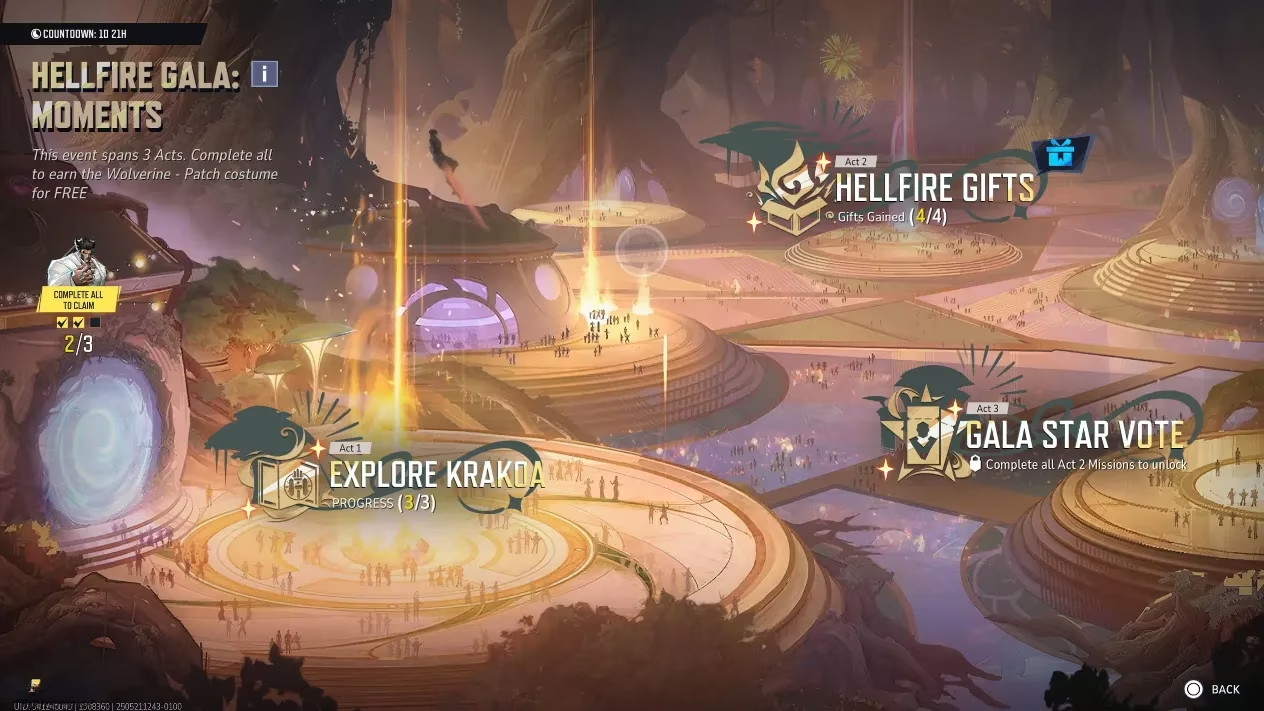 The quest language was, as one Reddit user perfectly put it, 'poorly worded and obtuse.' I remember seeing the Act 2 quests tucked away in another menu, and the progression indicators, like the '4/4 gifts' tracker, were extremely misleading. There were also different event currencies to track. I personally thought I was completely done with Act 2 after collecting all the cards, only to realize I was just... waiting. The game didn't make it clear that the unlock was on a global timer after completion, not a personal progression trigger.
This mix of unclear instructions and rigid time gates created a perfect storm of player annoyance. Here’s a quick breakdown of the core issues we faced:
-
Lack of Clarity: The event's rules and progression weren't communicated transparently in-game.
-
Disrespect for Time: The system didn't account for players with limited, sporadic play schedules.
-
Content Gaps: The acts didn't provide enough post-objective engagement to fill the mandatory waiting periods.
Reading through community forums, the sentiment was universal. One player commented, 'These “self-imposed” timegates are really strange. I can understand general timegates, but ones that start depending on when the individual player completes something is really clunky and awkward.' This hits the nail on the head. A standard calendar-based event is predictable; this hybrid system felt unpredictable and punishing for efficient players.
Another post resonated deeply with me as someone who can't game for hours every day: 'Everything is to force you to spend time playing and unlocking ASAP. As a 43 year old with kids who can barely find a handful of hours a week, it's really disappointing.' 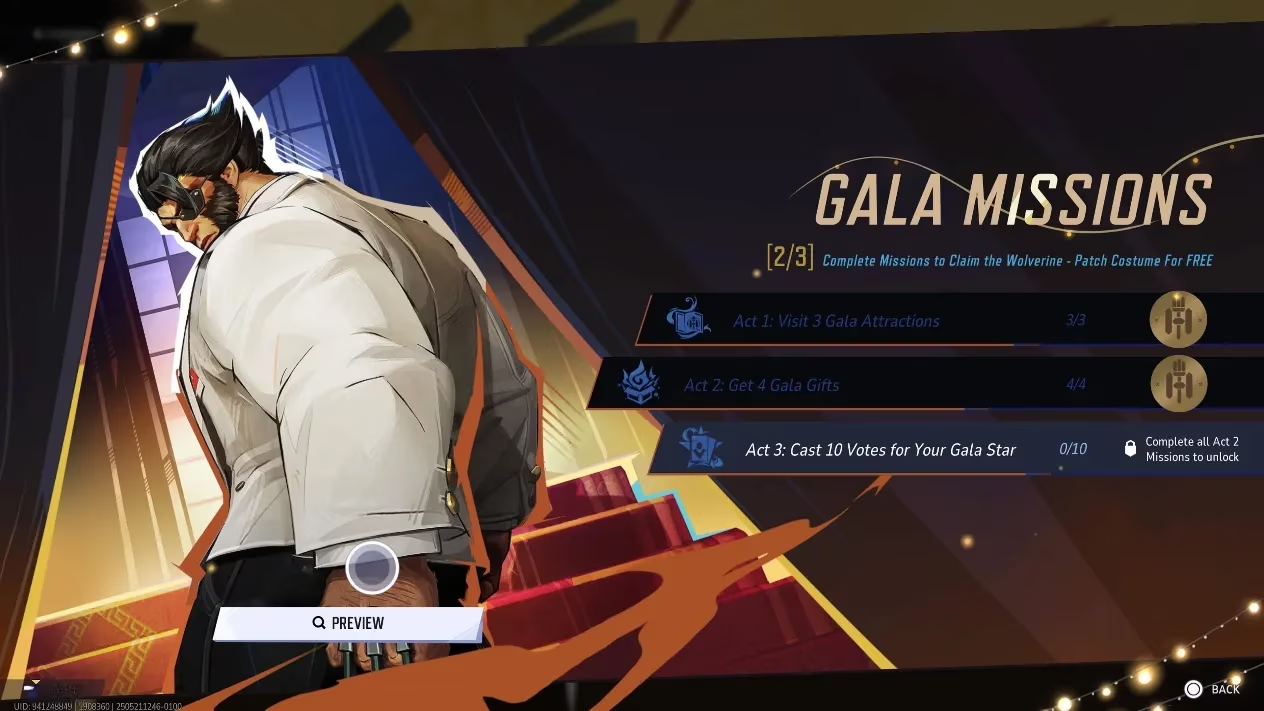 This is the human cost of these design decisions. It transforms exciting new content from a reward into a chore, making players who love the game feel excluded by its mechanics.
Looking ahead to 2026, I'm hopeful. NetEase has a generally good track record of listening to player feedback. The backlash against the Hellfire Gala's structure was loud and clear across social media and community hubs. For future events, I really hope the team rethinks this approach. Maybe they could consider:
-
Clearer Communication: Use tooltips, news posts, and in-game alerts to explicitly explain event structure and unlock conditions.
-
Alternative Engagement: Fill time between act unlocks with special, repeatable bonus challenges or modes that offer smaller rewards.
-
Player-Friendly Design: Structure events so that dedicated play is rewarded with continuous progression, not met with artificial barriers.
The Hellfire Gala's costumes were fantastic, and the concept was a home run. But the fun was undermined by the frustrating wait between courses. A live game thrives on its community's goodwill, and mechanics that devalue our time can erode that foundation quickly. Here's hoping the next big Marvel Rivals event learns from this stumble and delivers an experience that's as smooth and enjoyable as web-slinging through Times Square.