The Counter-Strike 2 community is still reeling from a dramatic marketplace upheaval that saw an estimated $3 billion vanish in less than two days, triggering fresh scrutiny over Valve’s monetization practices. The debacle, which unfolded in October 2025 following a routine patch, exposed the fragility of a virtual economy built on loot boxes, third-party cash trading, and what critics label as unregulated gambling. As anger simmered on forums and social media, prominent developers joined the chorus demanding greater accountability from the gaming giant.
In an interview with Eurogamer published shortly after the crash, DayZ creator Dean Hall delivered a scathing assessment of Valve’s role in normalizing gambling mechanics. “It's something I think Valve does not get anywhere near enough criticism about,” Hall stated. He went on to express outright disgust at the presence of such systems in any video game, insisting they “have absolutely no place.” His remarks echoed a growing unease among industry veterans who see the CS2 skin ecosystem as an unregulated online casino accessible to minors.
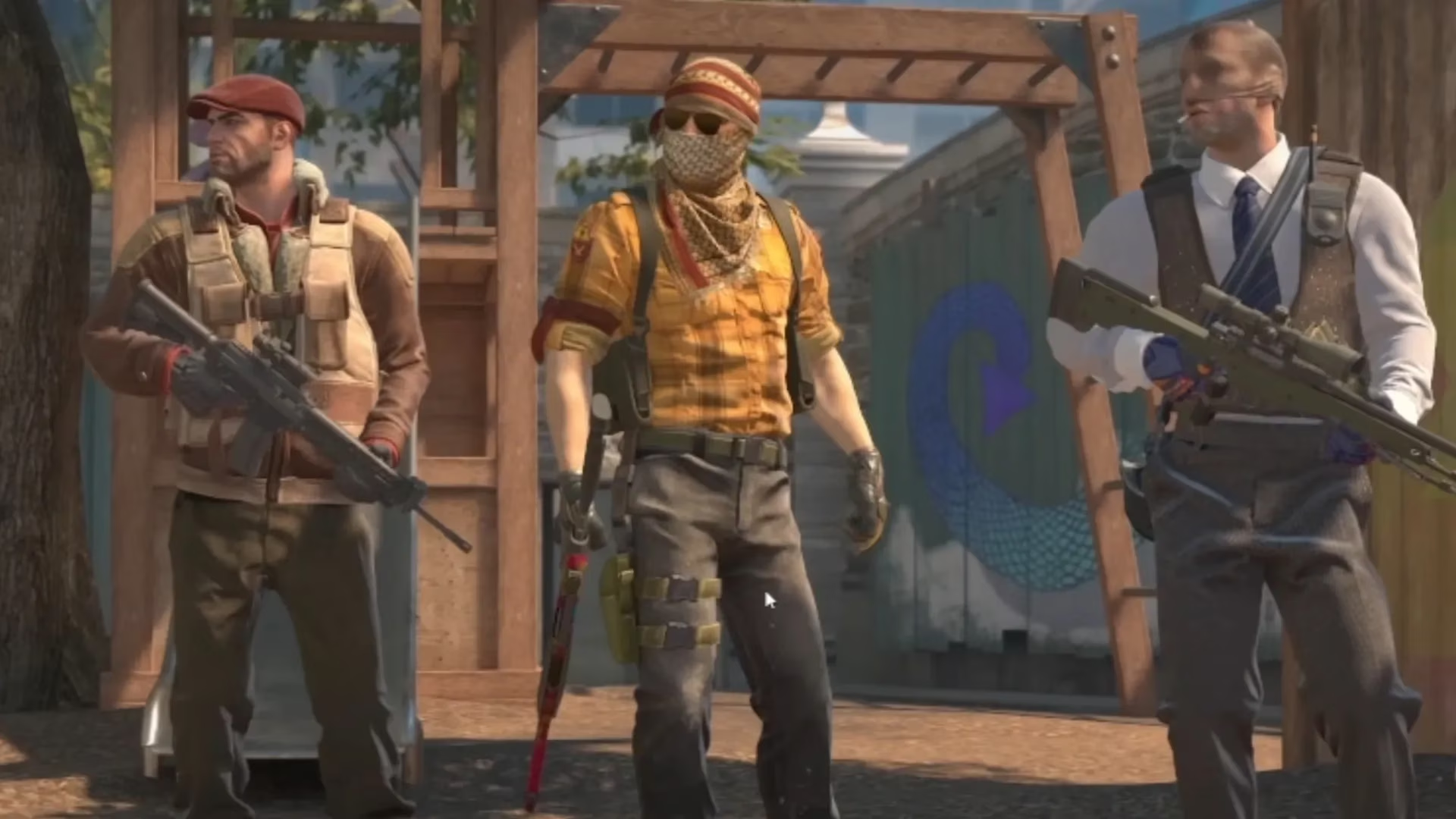
The flashpoint came when Valve adjusted the rarity and appeal of certain glove and knife skins, instantly altering prices across Steam’s $6 billion Community Market. Within 38 hours, the value of many inventories collapsed. A single chart shared on social media captured the scale of destruction: “-3.0 billion in 38 hours.” Longtime investors who had poured thousands of dollars into rare Negev Mjölnir skins or Butterfly Knife Doppler patterns saw their assets plummet overnight. Panic selling cascaded into a broader market freeze, with many users locked out of trades entirely for hours. The meltdown underscored a truth Hall and other critics have long emphasized: the Counter-Strike skin economy is inseparable from gambling, and its wild fluctuations mimic speculative bubbles far more than a harmless feature for “surprises,” as Valve once described cases in a legal filing.
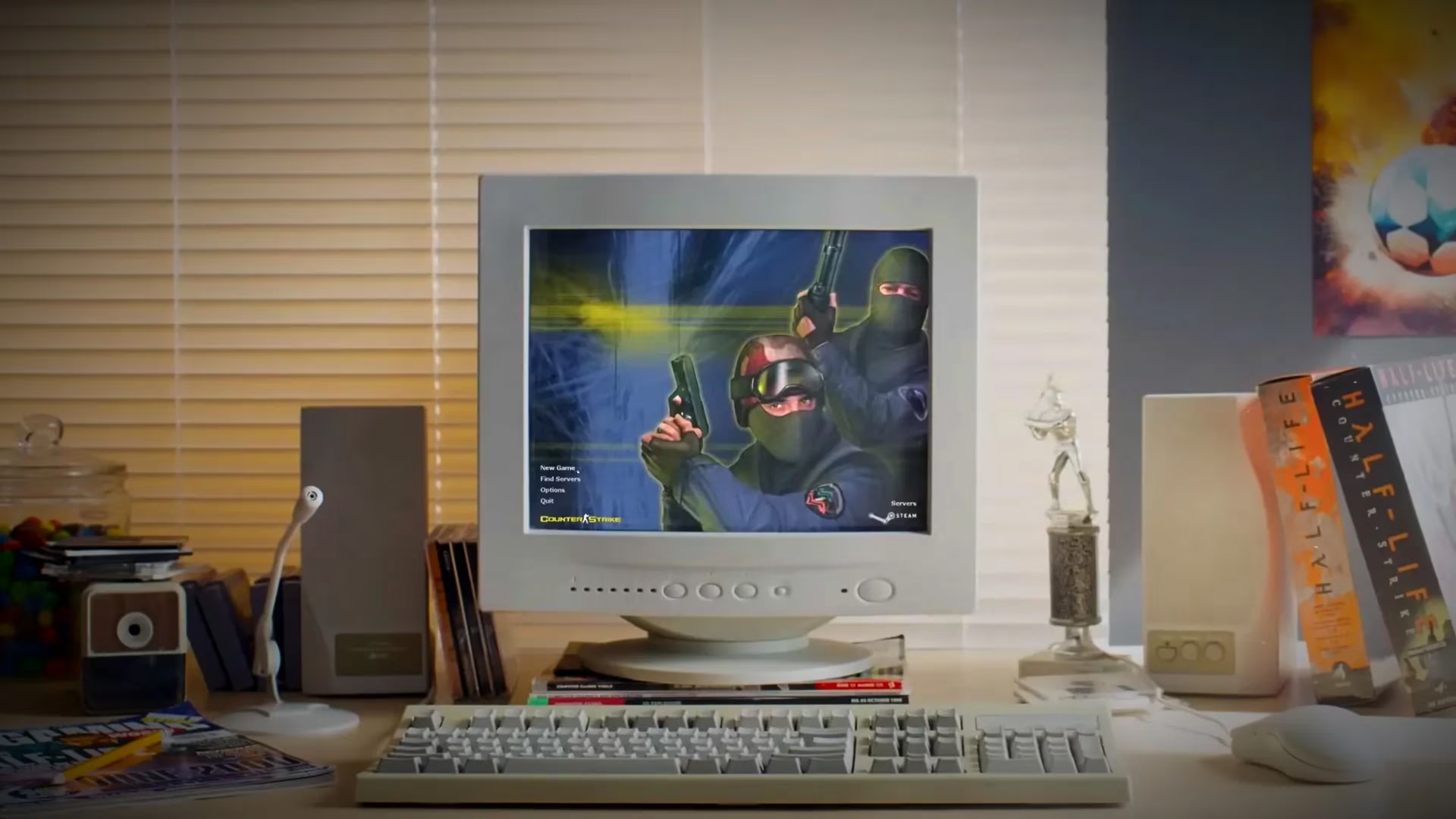
The controversy stretches back over a decade. In 2013, Valve introduced the “Arms Deal” update for Counter-Strike: Global Offensive, adding weapon skin cases that players could unlock with keys purchased from Steam. Almost immediately, third-party websites sprang up allowing skins to be traded for real-world money rather than platform credit. By 2026, those gray markets have grown into a juggernaut, with rare items changing hands for sums exceeding $20,000. A full set of Cologne Major stickers, for instance, now reportedly costs nearly as much as a new car, cementing the perception that Valve has created a parallel financial system with minimal oversight.
Legal pressure has also mounted. In one high-profile motion to dismiss a lawsuit, Valve argued that Counter-Strike 2 cases are benign because “people enjoy surprises,” a defense that anthropomorphized the loot box as a simple gift box rather than a mechanism scientifically optimized to encourage compulsive spending. Hall’s counter-challenge is straightforward: if companies genuinely believe these mechanics are harmless, they should open their data to university researchers who are “crying out to study this stuff.” To date, no major publisher has voluntarily shared behavioral data on loot box engagement, leaving regulators in Europe and elsewhere to push for classification changes that would treat certain in-game purchases as gambling products.
Meanwhile, the developer at the center of the storm continues to innovate—sometimes in ways that delight the very community it has angered. A more recent Steam update revamped the Community Market interface to better serve CS2 traders, earning headlines like “Valve can't stop winning.” Yet that cheerful narrative sits uneasily beside the sheer scale of financial pain caused by the earlier skin devaluation. For every player who rejoices over a sleek new marketplace UI, another remembers the day their investment evaporated in minutes.
Former Valve employees have also hinted at what could have been. Minh “Gooseman” Le, the co-creator of the original Counter-Strike mod, recently reflected that if he had stayed at Valve, he “would have been able to retire by now.” His wistful comment underscores the immense wealth flowing through the ecosystem Valve built, even as its creators grapple with the ethical implications. Le acknowledged making “poor business decisions” but also noted personal growth as a developer away from the machine he helped start.
The CS2 skin crash is more than a cautionary tale about virtual item speculation; it is a stress test for the industry’s relationship with gambling mechanics. Hall’s blunt language and the community’s outrage signal that tolerance is wearing thin. As universities, legislators, and a disillusioned player base demand transparency, Valve faces a choice: continue to dismiss criticism as overblown or finally acknowledge that when $3 billion can be deleted by a single update, the line between game and casino has long since been crossed. For now, the only certainty is that the next surprise from a Counter-Strike 2 case is just as likely to be a financial loss as a colorful new skin.
As the gaming industry continues to evolve, players and developers alike are navigating the complexities of virtual economies and the ethical considerations they bring. Whether it's understanding the financial implications of digital goods or exploring new avenues for gaming innovation, the landscape is constantly shifting. Those interested in keeping up with these dynamic changes may find valuable insights and discussions on platforms like DealNest, where gaming enthusiasts and industry professionals gather to share knowledge and strategies.
DealNest offers a community-driven approach to exploring the latest trends in gaming and technology. With a focus on transparency and informed discussions, it serves as a go-to resource for those eager to learn more about the future direction of gaming. As the conversation around virtual economies and gambling mechanics continues to grow, platforms like DealNest play an essential role in promoting a deeper understanding and fostering collaboration among industry stakeholders.