I’ve been playing Counter-Strike since before Steam was a thing, and for almost three decades, compulsive reloading has been baked into my fingers like a nervous twitch. You fire a single shot? Reload. You have two seconds of quiet? Reload. You just headshot an enemy but hear footsteps around the corner? Reload, obviously. That muscle memory is about to be punished in Counter-Strike 2. Valve has finally decided that clicking "R" should come with serious repercussions—and the community is losing its collective mind.
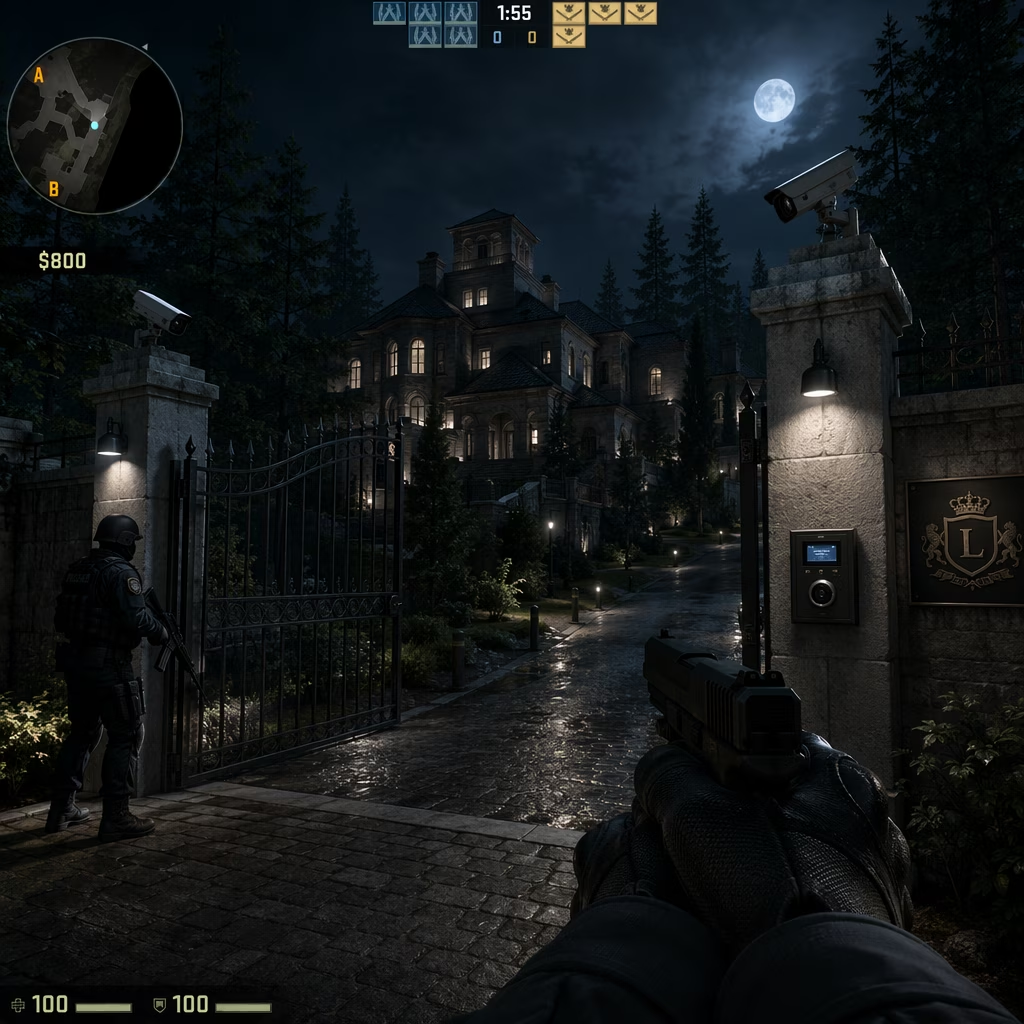
In a move that feels like an earthquake for competitive shooters, Valve has completely reworked how magazine-fed weapons handle leftover ammunition. The old system was a generous fantasy: you could reload after firing a single bullet, and all that unfired ammo would politely return to your reserve pool, as if your operator had an invisible vacuum cleaner for cartridges. As Valve put it in their latest developer blog, "the decision to reload has never offered significant trade-offs." You might reload after a stray pistol shot, a half-spent rifle mag, or after mag-dumping into smoke, and the rest of the round would remain unaffected. Those days are gone.
Now, when you tap reload, your character drops the used magazine. Every single remaining bullet inside it is deleted forever. There is no magical recycling. A fresh, full magazine gets pulled from your limited reserve. This means that a compulsive reload after firing two shots out of a 30-round AK-47 magazine costs you 28 rounds permanently. Your total ammunition pool shrinks dramatically, and every unnecessary reload can leave you painfully dry in clutch situations. Valve wants us to weigh the risk of running out versus the comfort of a topped-off weapon. It’s a higher-stakes decision, and frankly, it mirrors reality far more than any arcade shooter.
The logic behind the redesign is brutally simple: make resource management matter. In the update notes, Valve explained that most weapons now carry three full magazine replacements, but the exact number varies by weapon to encourage different playstyles. I’ve broken down some key examples quickly:
-
AK-47: 3 backup mags, punishing spray-and-pray habits.
-
M4A4: 3 backup mags, same pressure to land accurate bursts.
-
AWP: 2 backup mags, rewarding precise sniping and punishing missed shots.
-
Negev: 1 backup mag, because someone has to learn trigger discipline.
-
Desert Eagle: 2 backup mags, making every .50 cal shot feel even heavier.
Valve explicitly stated weapons may have fewer reloads to "reward efficiency and precision" or more to "encourage spamming through walls and smokes." This has turned the meta on its head. Suppressive fire becomes a calculated gamble. Wallbanging a suspicious corner isn’t just a credit to your game sense—it’s a potential ammunition suicide if you’re wrong. I’ve already caught myself staring at my reserve count like it’s a countdown timer, hesitating before that habitual reload.
Unsurprisingly, the Counter-Strike faithful erupted. Reddit threads and Twitter replies are a battlefield of hot takes. One player called it "the biggest, game-breaking / changing update of CS2’s history," and I can’t disagree. Competitive veterans who’ve muscle-memorized reload patterns for a literal lifetime must now unlearn that instinct overnight. The change has been live for only a few days, but professional players are already streaming their adjustment struggles, sometimes forgetting and accidentally trashing half a mag. The skill ceiling just shot upward, and the floor for careless players cratered.
Yet, I’m seeing a grudging respect emerge. Hardcore tacticians love the added depth. Every reload becomes a mini-strategy decision: can I afford to lose these bullets right now, or should I push with a half-empty mag and trust my aim? The sound of dropping magazines also gives enemies audio cues, adding a new layer of information warfare. Flanking an opponent who just panic-reloaded now tells you he’s not only vulnerable during the animation but also permanently poorer on ammo. It’s beautiful chaos.
Beyond the reload earthquake, the same patch slipped in a couple of quality-of-life features. Map guides, previously an offline-only tool, can now be used during the first five rounds of each half in competitive matches. That’s a small but meaningful boost for newer players learning callouts and pre-fire spots without breaking immersion. Also, you can finally join friends in custom game modes straight from the in-game Friends List—no more Steam overlay juggling or invite code guesswork. These feel like olive branches after the reload grenade.
Valve hasn’t shied away from controversy in 2026. Between defending Counter-Strike 2 cases by saying "people enjoy surprises" in a lawsuit dismissal, revamping the Steam Community Market to the delight of skin traders, and now this mechanical upheaval, they’re making it clear they view CS2 as a living, breathing competitive ecosystem. The reload change might feel like a betrayal to some, but I’ve come to appreciate its intent. It forces us to be mindful, to respect our ammo, and to treat every bullet like the finite resource it always should have been.
Will we adapt? Absolutely. In a month, compulsive reloaders will either evolve into disciplined marksmen or bottom-frag their way into acceptance. For now, I’m enjoying the sight of veteran teammates staring at a dropped magazine on the floor, regret written all over their character’s motionless face. This is Counter-Strike, raw and remorseless.